


This week: poppi adds energy, Vita Coco debuts sports-drink-inspired flavors, and Good Warrior puts protein ahead of format.
Your favorite Grocery Geek is back… now with a mini grocery geek in tow and a lot more opinions on toddler food.
Today’s newsletter asks if and how brands can stretch beyond the categories that built them. How does a brand carry its consumer promise with it? Will that growth drive incremental sales? And what happens when that promise is flavor, functionality, or format?
So who’s looking to go wider? Read on to hear more about:
Can PepsiCo bring poppi into another category by adding energy?
How Vita Coco plans to enter the sports drink set via new flavors – and where did PWR Lift go?
With protein bar launch, can PepsiCo build Good Warrior around an attribute?
poppi Is Getting an Energy Drink
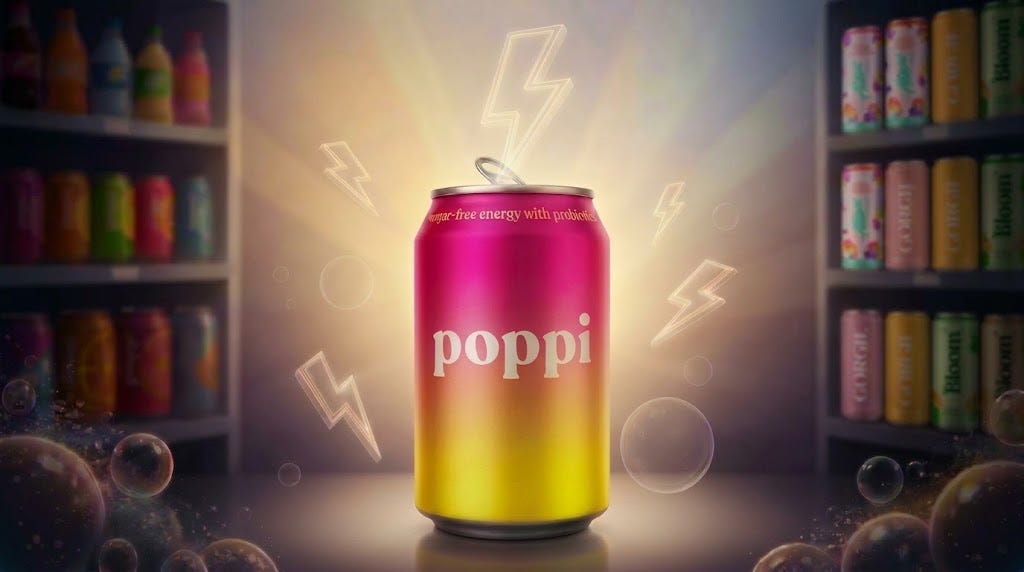
PepsiCo already holds a major position in soda and energy but now it wants to find incremental sales by offering something in between.
After acquiring the beverage brand in 2025, this week PepsiCo is debuting poppi Lift, an energy(ish) drink. Launching with a 12 oz can, the SKU will have 70 mg of caffeine, 5 grams of sugar, and added Vitamin B3. The initial description only lists a Peach Ring flavor and doesn’t mention poppi’s signature prebiotic and apple cider vinegar blend, so stay tuned.
PepsiCo says Lift was designed to “fill the whitespace between soda and energy drinks.” Okay, I get the pitch, but is there whitespace that needs to be filled? And does the Lift profile solve that consumer need?
According to PepsiCo’s description, Lift’s caffeine level offers drinkers “a boost without committing to a high-caffeine [option].” I’m curious to see if consumers will actually feel there’s a considerable difference between 40mg and 70mg? Or is 70mg simply an awkward middle ground between soda and energy? Still, there may be something to this dosage, with many younger consumers already looking for lower caffeine options in categories such as coffee. So why not energy drinks as well?
Click Here to Read more about Lift and the strategy behind it (Free)
Vita Coco Is Giving Coconut Water a Sports Drink Makeover
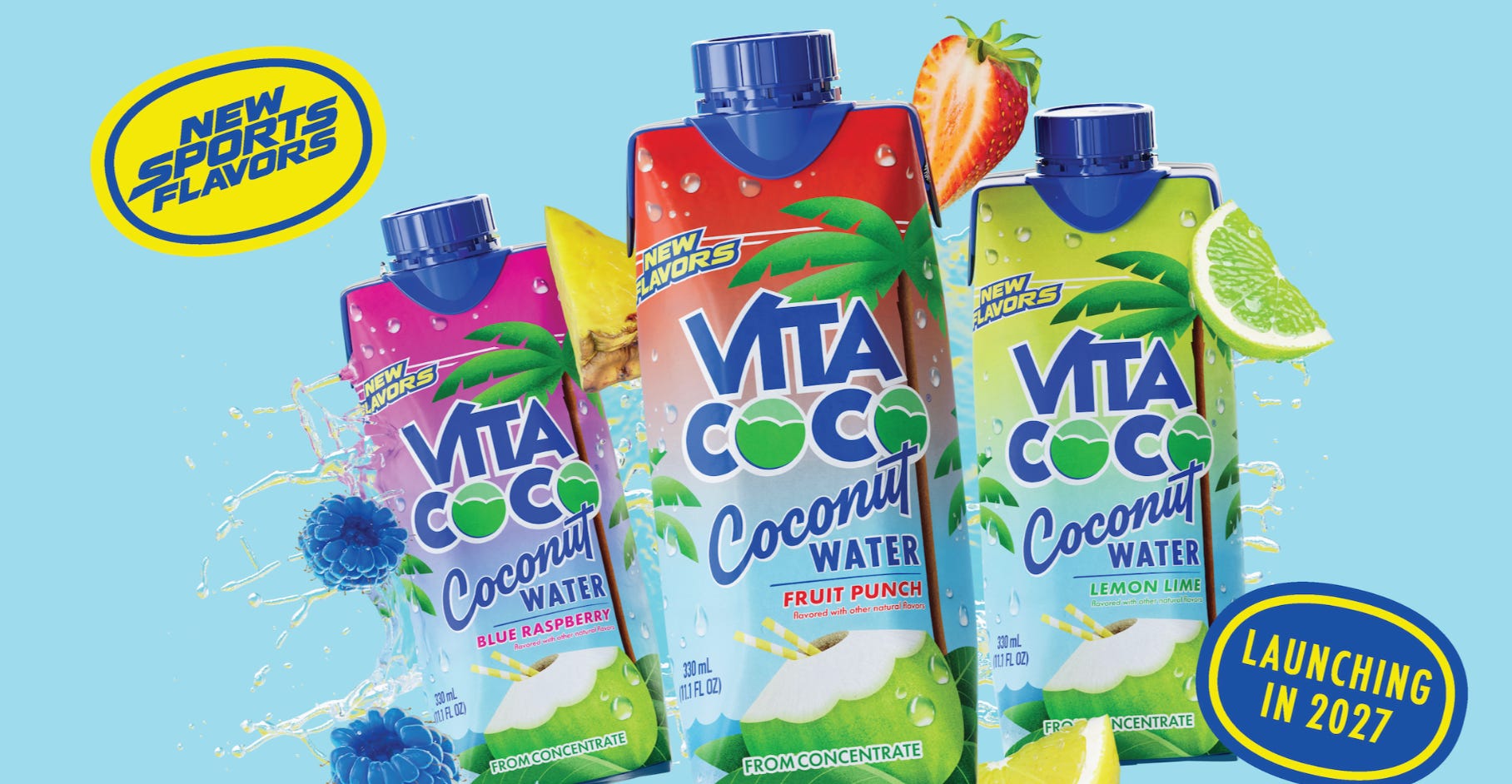
Vita Coco has spent years telling consumers that coconut water can be a sports drink. Now it’s going one step further, making its coconut water taste more like a sports drink. In 2027, the coconut water brand will roll out several new “sports-drink-inspired” flavors, including Blue Raspberry, Fruit Punch, and Lemon Lime, designed to be “light and chuggable.”
It’s an interesting time to take this strategy. While The Vita Coco Company has said it’s “doubling down” on marketing hydration as a benefit of coconut water, PWR Lift, its previously launched hydration product, seems to be discontinued (more on that in a second).
Vita Coco claims the new coconut waters have “3.5x the electrolytes of the leading sports drink,” which the small print shows is 1265 mg per 500 ml, compared to roughly 292 mg per 500 ml in the leading sports drink. It’s a slight bump in electrolytes from its original flavor. Still, the new SKUs seem to be a flavor play rather than a real shift in functionality, with the biggest change not being what’s inside the bottle, but how the brand is positioned.
But back to sports drinks. The Vita Coco Company has tried to hit this set before, both with a very short lived Vita Coco Sport line in 2014 as well as with the launch of PWR LIFT in 2021. Billed as a way to “elevate your hydration,” PWR LIFT had 650mg of electrolytes per 500ml.
In its February 10-K filing, The Vita Coco Company indicated change was afoot with PWR LIFT, writing, “While PWR LIFT has proved to be attractive in online sales channels, we are still forming a successful long-term approach to retail channels. In 2026, we will continue online sales of PWR LIFT while redesigning our approach to succeeding in the protein drink category.”
Despite that, the PWR LIFT Amazon storefront now directs shoppers to other Vita Coco products, and its social channels are gone. The brand is still available through The Vita Coco Company’s wholesale site, making its status murky.
So let’s see where the new flavors wind up in store. If they go into coconut water, it may be harder to attract new gym-going consumers who have a specific set on their shopping list. But if it’s next to Gatorade and Powerade, the proposition is clear: a coconut-water-based alternative to the sports drink you’re already considering.
You Guessed It, Click here to read more (Free Link)
Good Warrior’s Next Move: From Meat Sticks to Protein Bars
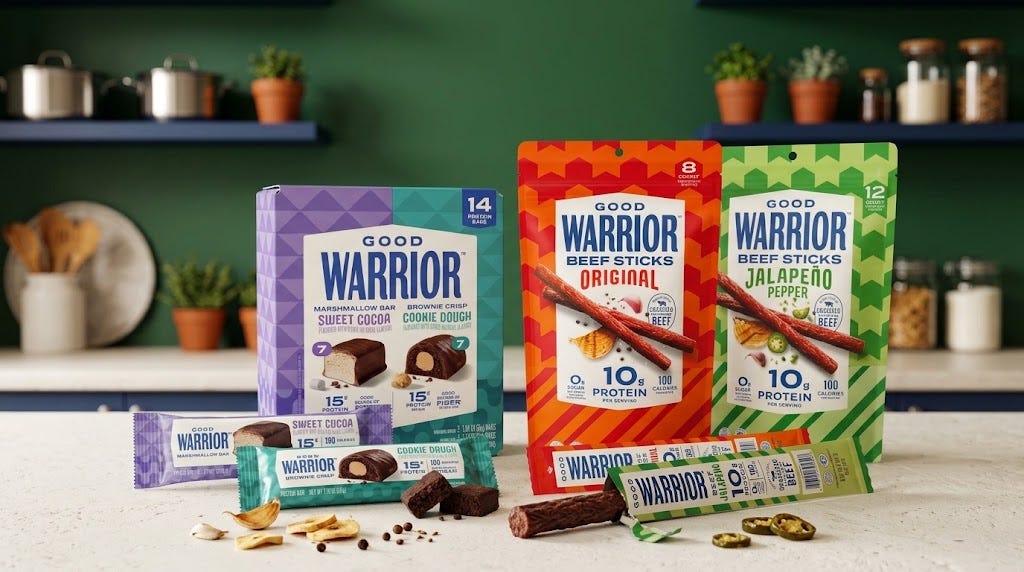
Less than a year after launching its protein masterbrand Good Warrior, PepsiCo is pushing beyond its initial two meat-stick SKUs and into the protein-bar set.
Already available through Sam’s Club, the brand is rolling out a 14-count pack with two bar types: a fluffy Sweet Cocoa Marshmallow bar and a chewier Brownie Crisp option. Each bar contains 15 grams of protein but differs in formulation.
Meat sticks and protein bars are an interesting pair. Other brands have stuck with the protein bar format and tried to straddle both savory and sweet flavors (anyone remember RXBar’s TIG SKUs in BBQ, Buffalo, Pizza, and Chili Lime? Or KIND’s Jalapeño bar?). But few have tried to go cross-occasion. Despite what meat snack companies say, I’m not sure the average shopper sees meat sticks and protein bars as interchangeable snacks when seeking a protein boost.
With Good Warrior, it seems PepsiCo isn’t so much testing a category or even brand; it’s testing an attribute: protein. Instead of focusing on category, Good Warrior asks consumers to buy into the protein proposition first, the food format second, and the brand coming in third. It’s a very different strategy than many emerging brands, which often lead with brand. I’m not sure how this will play out. Protein is a strong attribute, but is it a persuasive brand identity?
Say it with me, Click Here to Read More! (Free Link)
Kraft’s Latest Stretch: Mac & Cheese Ramen
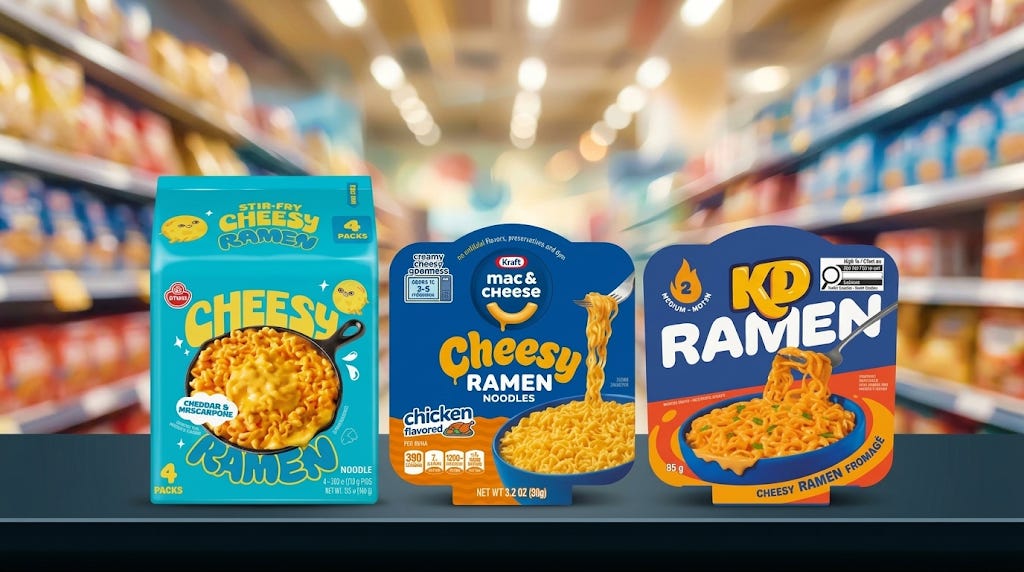
I leave you with this last launch: Kraft Mac & Cheese Ramen. Kraft Heinz claims it’s the brand’s first “new” category in 20 years, but the company launched a nearly identical product, KD Mac and Cheese, in Canada earlier this year. In a press release, Kraft Heinz said the launch is part of a strategy to “[find] new ways for its iconic brands to show up in categories and occasions where consumer interest is growing,” noting that the “cheesy ramen” segment has doubled over the past three years.
I’m curious to see how consumers respond. Cheesy ramen is already a well-established format in Korean food, with brands such as OTOKI and Samyang selling their own offerings and cheesy ramen becoming a growing social media trend. I wonder why Kraft didn’t partner with a Korean influencer or chef to develop the line, someone who could have lent the launch some authenticity.
From a product standpoint, what might have been truly innovative? Playing to the trend of putting Kraft Singles on top of ramen and launching a perishable SKU alongside the cheese brand. In January the brand even posted a recipe using its cheese on top of ramen. However, the logistics associated with such a launch are somewhat mind-boggling, so I’m not holding my breath.