


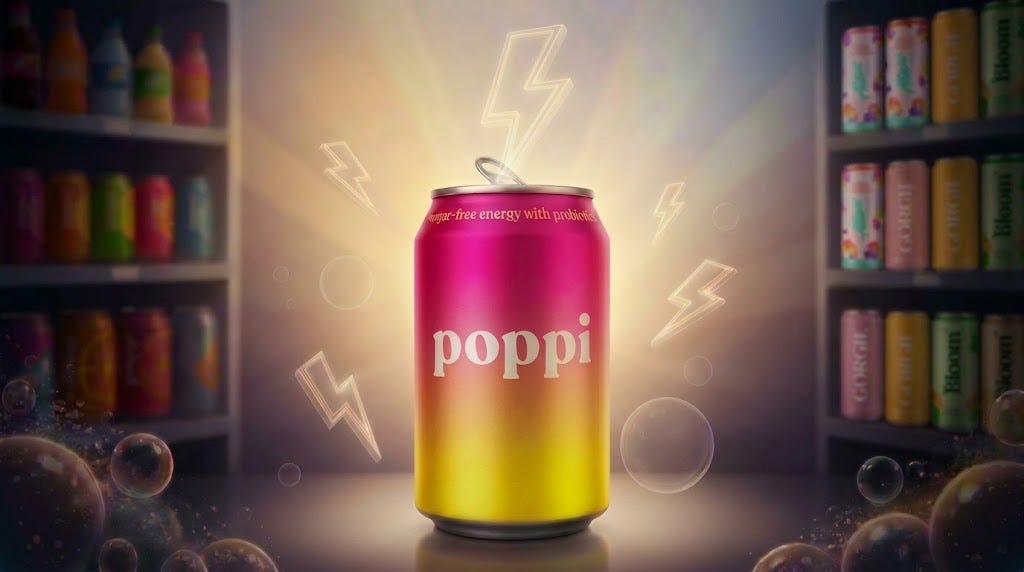
PepsiCo already holds a major position in soda and energy but now it wants to find incremental sales by offering something in between.
After acquiring the beverage brand in 2025, PepsiCo is now debuting poppi Lift, an energy(ish) drink. Launching with a 12 oz can, the SKU will have 70 mg of caffeine, 5 grams of sugar, and added Vitamin B3. The initial description only lists a Peach Ring flavor and doesn’t mention poppi’s signature prebiotic and apple cider vinegar blend, so stay tuned.
Lift was designed to “fill the whitespace between soda and energy drinks.” Okay, I get the pitch, but is there whitespace that needs to be filled? And does the Lift profile solve that consumer need?
Plenty of sodas, including some of poppi’s own flavors and Olipop’s SKUs, have 30-50 mg of caffeine. Meanwhile, energy brands competing for the same female consumer deliver substantially more caffeine. Alani has 200 mg, Bloom 180 mg, and Gorgie 150 mg. All three have shown there’s a market for an energy drink that doesn’t look like a conventional energy drink, but they still contain the caffeine you expect from an energy drink.
According to PepsiCo’s description, Lift’s caffeine level offers drinkers “a boost without committing to a high-caffeine [option].” But will consumers actually feel there’s a considerable difference between 40mg and 70mg? Or is 70mg simply an awkward middle ground between soda and energy? Still, there may be something to this dosage, with many younger consumers already looking for lower caffeine options in categories such as coffee. So why not energy drinks as well?
Also pay attention to the 5 grams of sugar. Recent Morgan Stanley research found that some of the energy category’s growth is tied to GLP-1 users looking to combat the fatigue that comes with decreased appetite. For those specific shoppers, Lift’s added sugar could push it from a replacement indulgence into an indulgence itself.
If it does work, PepsiCo could prove energy is a benefit it can layer onto other beverages, rather than a category itself. The company has already tried adding a functional benefit to some existing brands: after the growth of prebiotic sodas like Poppi and Olipop, it launched a prebiotic Pepsi.
In my opinion, the line’s success and incremental sales could depend on where Lift sits in store. Soda drinkers already know poppi and may not upgrade to a premium option for only 20mg more of caffeine. If Lift enters the energy drink set, however, not only does it get in front of a whole new consumer, but the premise of a low-caffeine energy drink feels more unique and defensible.
Although space in the energy drink cooler comes at a premium, and with high turn expectations, PepsiCo has just a bit of negotiating power with retailers given it leads U.S. distribution for Celsius Holdings’ Alani Nu, Celsius, and Rockstar Energy. Plus, retailers know PepsiCo has the money to invest in marketing and try to prove out this low-caf thesis.
While we don’t know how widely this line will roll out, and it could simply be a test with one banner, given PepsiCo appears to be planning to introduce it at NACS, my gut says that’s unlikely.