


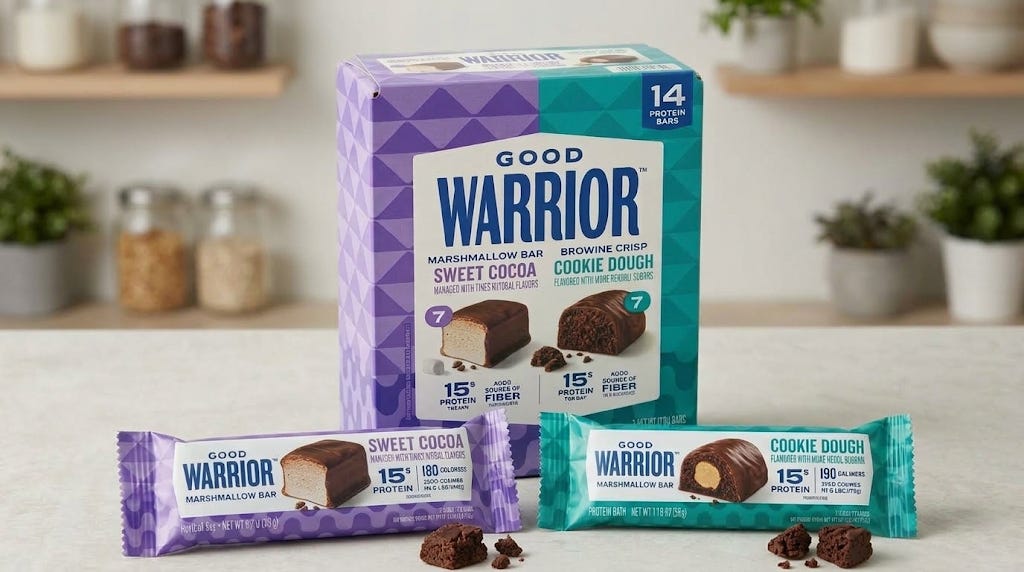
Less than a year after launching its protein masterbrand Good Warrior, PepsiCo is pushing beyond its initial two meat-stick SKUs and into the protein-bar set.
Already available through Sam’s Club, the brand is rolling out a 14-count pack with two bar types: a fluffy Sweet Cocoa Marshmallow bar and a chewier Brownie Crisp option. Each bar contains 15 grams of protein but differs in formulation. Both use whey and milk proteins; the Marshmallow bar also contains egg whites, and the Brownie Crisp adds soy protein isolate and whey protein crisps.
Each has 190 calories, 6 grams of added sugar, and 15-17% of the daily fiber value per serving. Both bars use stevia and allulose as sweeteners, with allulose listed as the first or second ingredient by weight on the panel.
Meat sticks and protein bars are an interesting pair. Other brands have stuck with the protein bar format and tried to straddle both savory and sweet flavors (anyone remember RXBar’s TIG SKUs in BBQ, Buffalo, Pizza, and Chili Lime? Or KIND’s Jalapeno bar?). But few have tried to go cross-occasion. Despite what meat snack companies say, I’m not sure the average shopper sees meat sticks and protein bars as interchangeable snacks when seeking a protein boost.
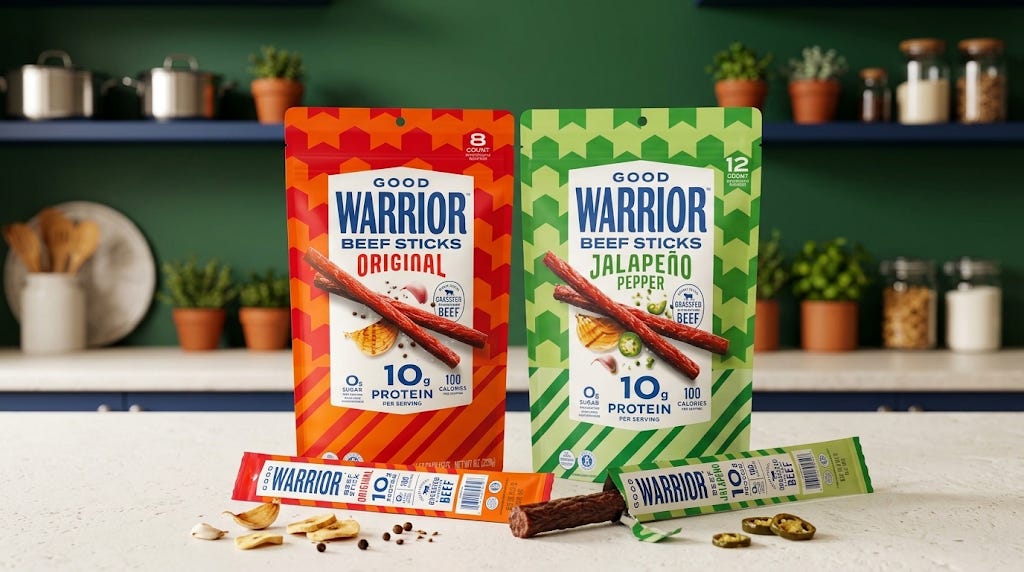
With Good Warrior, it seems PepsiCo isn’t so much testing a category or even brand; it’s testing an attribute: protein. PepsiCo has tried to protein-ify existing brands, notably with protein-enhanced Doritos, offering shoppers a “better” version of something they already eat. Yet a strong brand identity can limit how consumers perceive a brand. A Doritos meat stick, for example, will never be seen as a “healthy” snack regardless of protein content.
Instead of focusing on category, Good Warrior asks consumers to buy into the protein proposition first, the food format second, and the brand coming in third. It’s a very different strategy than many emerging brands, which often lead with brand. I’m not sure how this will play out. Protein is a strong attribute, but is it a persuasive brand identity?