


Hello, Grocery Geeks!
Big thanks to everyone who reached out and to my new subscribers —I can’t wait to catch up. As always, my inbox is wide open for your thoughts, press releases, tips, and especially your spiciest hot takes.
I’m coming to you after two weeks of battling a cold that refuses to quit, so if you catch any questionable jokes or puns in this issue, blame the elderberry syrup. And if you know how to dodge germs while parenting a tiny human who believes everything is lickable, send your secrets my way. Sniffles aside, let’s dive in.
Read on about:
Which former investor is taking on a co-CEO role alongside a CPG superstar
Which of my favorite brands has exited the market
What are some key insights and hot takes from WILDE’s recent $40M raise
Why Millie Moon is having a really bad week
What investment bank is buffing up their consumer practice
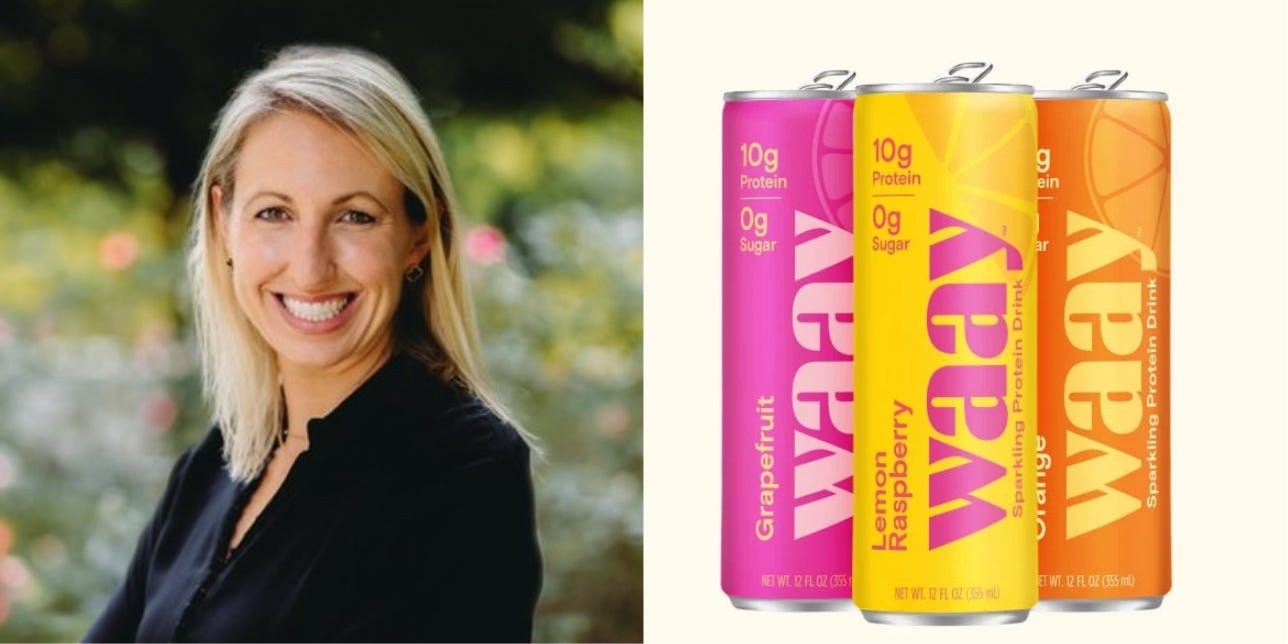
Primal Kitchen Co-Founder Gets a Co-CEO for Waay
Melissa Dolan is on the move, stepping in as co-CEO at protein-powered beverage brand Waay.
You may remember her co-CEO and Waay’s founder, Morgan Zanotti, who also co-founded Primal Kitchen. After being a first mover in reinventing the condiment category, and I’d argue leader in the rise of avocado oil, Primal was ultimately sold to Kraft Heinz in 2018 for $200M. Dolan also has a stellar background, most recently investing in emerging brands at Emil Capital Partners and previously holding brand management roles at General Mills and Danone.
“Both of us have playbooks from our past and are implementing them here at Waay,” Dolan told me, adding that Morgan’s history has “opened a lot of doors” for the brand while her own background has helped refine the company’s processes and systems. “I come from big food but spent the last five and a half years looking at thousands of early-stage brands. During that time, I learned how to adapt the big food playbook for early stage [companies].”
Waay only hit the scene last year, but it’s already landed on shelves at Whole Foods, Sprouts, Hy-Vee, and Fresh Thyme, with more expansion on the horizon, according to Dolan. Unlike its competitors that are chasing protein shakes, Waay puts refreshment front and center.
If you ask me, the Dolan-Zanotti duo (plus their killer product) makes Waay a brand to keep firmly on your radar. Zanotti brings marketing magic and product wizardry, while Dolan delivers the operational and financial savvy we grocery geeks crave. (Psst: rumor has it, a raise is coming!)
One thing I appreciate about Waay is that it targets the female shopper, but not in a way (ha) that comes off like it’s pandering, and it doesn’t use fear-mongering.
The messages of focusing on the positive (“more joy” as Waay puts it), not claiming a lack of protein will ruin your health, steering clear of overpromising, and simplifying daily habits could all help Waay tap into a massive consumer segment and bring new shoppers into the functional beverage aisle. So while Poppi keeps chasing the sorority crowd, could Waay be the next big hit with their moms?
No Bull Is No Longer
Over the past few weeks I’ve been unable to find my favorite veggie burgers and now I know the reason.
In a LinkedIn post, NoBull founder Elizabeth Raymond announced that the frozen food company has shuttered after 15 years in business. Starting at farmers’ markets, NoBull was based on Raymond’s mother’s recipe. The Virginia-based company ultimately grew to be “sold in thousands of stores, and [became] a multi-million-dollar CPG company,” Raymond’s post said.
In April, Whole Foods cut the burger from its shelves, which had been sold in the natural products retailer for over 13 years. At the time, No Bull reportedly told its customers “Retail expectations are changing…And the path forward for small independent brands - particularly family-run and women-owned businesses – is increasingly complex,” according to a comment on Facebook. “We don’t want to minimize the impact this change will have. It affects our business, our team, and our next steps.”
Here’s why I was a die-hard No Bull fan: it was a veggie burger that actually showcased real veggies. And each patty was satisfyingly hefty at 4 ounces, unlike the more petite 2.5- to 3-ounce versions of most veggie burgers.
You’d think No Bull’s ingredient list would be a slam dunk in today’s anti-ultraprocessed climate. But like the brand said, the frozen aisle is a tough battleground. Shoppers pigeonholed the set as filled with “fake” processed options like Beyond and Impossible and competition became fierce as shelf space retracted following the plant-based meat heyday. To combat this, some brands have found success by branching out—Actual Veggies is now making fries and tots, while Dr. Praeger’s has doubled down on frozen bites and veggie cakes, but that requires cash. Meanwhile, I’ll be here saving my last No Bull burger for a special occasion.
A Wilde Run (and Raise)
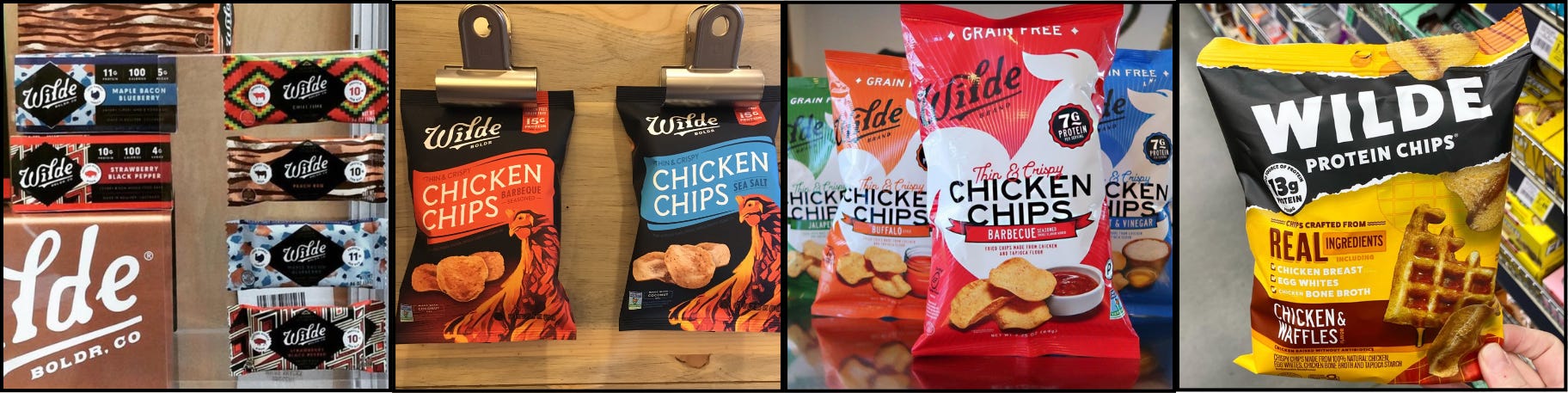
Chicken-based chips might sound like a long shot for catching consumers’ attention—in fact, when I first wrote about WILDE’s chips (I was among the first reporters to do so), I was scoffed at. But here we are, and now investor S2G is putting $40 million into the company.
According to a press release, WILDE has surpassed $100 million in sales, is sold in more than 35,000 doors nationwide, and recently opened a 130,000-square-foot production facility.
But here’s a bit of WILDE trivia you probably haven’t heard: the company actually started out making chicken-based, shelf-stable bars. Yes, really—chopped, compressed chicken bars. Unsurprisingly, that line didn’t last long. It’s funny that while Poppi’s origin as Mother Beverage gets name-dropped in every other article, you’ll almost never see anyone mention WILDE’s bar days.
(Side note: If you want to hear a great story, ask founder Jason Wright about how he handed out chicken chips from a Ziplock bag at Expo. Apparently after he pitched me on writing about the chips, he had to figure out how the heck to scale up his chips).
Here Are Three Other Takeaways from WILDE’s success:
Never underestimate the power of a savvy category manager and a strong retailer relationship. Whole Foods Market CMs bought into the brand concept early and I’d argue WILDE’s real turning point came when the retailer gave the chips a star slot in their new keto salty snack set. That move put WILDE in a prime spot—but gave them a little leeway to earn their shelf space.
Stay focused. WILDE once experimented with pork-based chips, those fizzled out too. By zeroing in on chicken, they doubled down on sourcing, production, and a crystal-clear message. That focus helped them sharpen costs and build real margin.
Sometimes, less really is more when it comes to branding. WILDE has tried plenty of packaging looks, but you won’t find a chicken on the front of their latest bags. For years, they put their star ingredient front and center, but let’s be honest—chicken chips are a tougher sell to the mainstream than “protein chips.” And maybe, just maybe, shoppers don’t want a full-color reminder of what they’re munching on.
Millie Moon Sees Competition from Big CPG, Call for Recall
The diaper aisle has seen a lot of new entrants in the last few years, with the entrance of new Semi-Premium (Millie Moon, Rascals, Happy Hues); Premium (Coterie, Pampers Amore); and “Clean” Label Premium (Kudos, Freestyle) options. And it’s these players that have pushed big brands like Huggies and Pampers as well as private label options to undertake serious innovation and branding efforts.
Each brand has their reasons for growth, but in my opinion, Millie Moon and Rascals (both made by Asia-based Zuru Edge, an arm of Zuru) are a product of their strong retailer relationships, acting as almost private-label adjacent options. For years Millie Moon was a Target exclusive, and Rascals at Walmart, and though distribution has expanded, both have stayed pretty narrow and focused on those two chains. Earlier this year, Target also became the exclusive retailer for Zuru’s latest diaper brand, Hey Tiger.
Let’s back up though, if you don’t know Zuru, you should. The company just announced a headquarters in China with room for 3,000 team members and in the US it has offices in Arkansas and Seattle, both retailer headquarter hot spots. Beyond baby care, Zuru Edge owns haircare brands Monday and Being; beauty brands Daise; candy company Gumi Yumi Surprise; Rhodes Pet Science; and several cleaning brands. Last year, Walmart gave Zuru its Total Consumables Supplier of the Year and Excellence in Price Awards.
However, this year (and in particular this week) have proved to be difficult for Zuru. Increasingly, parents have reported changes to Millie Moon that they say have caused rashes and even burns. This year, 600 incident reports involving Millie Moon diapers have been submitted to the U.S. Consumer Product Safety Commission, with 286 in the past month alone. Earlier this week, a news station reported on a two-year-old admitted to the burn unit after using Millie Moon diapers.
The concerns escalated yesterday when Consumer Reports’ advocacy arm issued a statement calling for Millie Moon diapers to be recalled. The publication and nonprofit had already urged parents not to use Millie Moon. To date, Zuru has maintained that nothing is wrong with Millie Moon diapers, saying it has undertaken rigorous testing, though it has not shared the exact results.
So where might these parents turn next? Keep an eye on Kimberly-Clark’s (the maker of Huggies and Pull-Ups) latest launch this week: Big Dream Diapers. Billed as having a “dreamy” feel, the line launched “in collaboration with” Amazon, with its listing featuring a head-to-head comparison to Rascals and Millie Moon.
But here’s one golden rule for brands: never anger a crowd of parents. The push to hold Millie Moon accountable seems to have really started in Facebook and Reddit groups, where parents spotted changes to the Millie Moon design, the disappearance of their “totally chlorine free” callout, and soon after, a wave of dermatological issues. Literally thousands of comments on Reddit alone show parents launching a grassroots campaign, urging each other to file CPSC complaints.
Yet despite all the uproar, surface-level consumer awareness is fascinating. There aren’t really calls to boycott Zuru as a whole, and plenty of parents on reddit say they simply switched from Millie Moon to Rascals. Maybe due diligence only goes so far?
Meanwhile, the company’s sibling founders are controversial to some (I snorted at the reddit comment: “I tell my 12-month-old…that we don’t buy Rascals cos Satan makes them.”). In 2022, for example, Zuru won a lawsuit against Glassdoor, forcing the website to reveal the user information for the authors of negative reviews. Yet despite the rising role politics and social issues play in consumers’ purchasing choices, it also seems like there’s not a ton of complaints about Zuru’s founders among U.S. shoppers. Sometimes a brand is, apparently, just a brand and not a personal statement.
An I-Banker to Watch?
In the CPG world, you’ll find investment banker Piper Sandler in a whole lot of press releases about acquisitions, IPOs, raises, and the like. Think Spindrift, Zevia, Amy’s and Chomps, to name a few. In short, Piper Sandler has a rockstar team (recently promoting Carlos Sanchez to co-head of consumer investment banking alongside Damon Chandik and Janica Lane).
But with the increasing amount of cash flowing into the consumer goods space, other investment banks are building out their own practices. It’s with that exact goal in mind that Baird Global Investment Banking has appointed Dan Oxenham, former managing director at Piper Sandler’s consumer practice, to lead coverage of the Food & Beverage industry.
At Piper, Oxenham advised on f&b transactions including the sales of Simple Mills to Flowers Foods, FitCrunch to 1440 Foods and Yasso to Unilever. To be transparent, I haven’t interviewed the Baird folks before, however the consumer team has overseen 19 advisory and financing transactions, representing approximately $51 billion in transaction value since 2021. Notable deals include Asto Consumer Partners’ investment in Starface, Highpost’s investment in Magic Spoon, and good2grow’s sale to Wind Point Partners. So let’s see what the addition to Oxenham brings to the table.